
The Attribution Problem: Why You Don't Know Which Ads Actually Drive Sales

You're running ads across multiple channels. Google, Facebook, display networks, retargeting campaigns. You're spending thousands every month.
But here's the question nobody can answer: Which ads are actually making you money?
Most businesses can't. They track clicks. They track impressions. They track engagement. But they don't track what actually matters—which ad led to a sale.
That's the attribution problem.
What Is Attribution?
Attribution is simple: it's the process of crediting the right ad for a conversion.
Here's the reality: most customer journeys involve multiple touch points. Someone sees your display ad on Monday. They click a retargeting ad on Wednesday. They search for you on Google on Friday. Then they call or buy.
Which ad gets credit?
In most cases, the last one. Google gives credit to the last search. Facebook gives credit to the last click on their platform. Your advertising platform gives credit to the last touchpoint before conversion.
But that's not the full story. That display ad on Monday? It probably influenced the decision. The retargeting ad on Wednesday? It kept you top-of-mind. The Google search on Friday? It was just the final nudge.
When you only credit the last touchpoint, you're making decisions based on incomplete data.
Why Attribution Matters
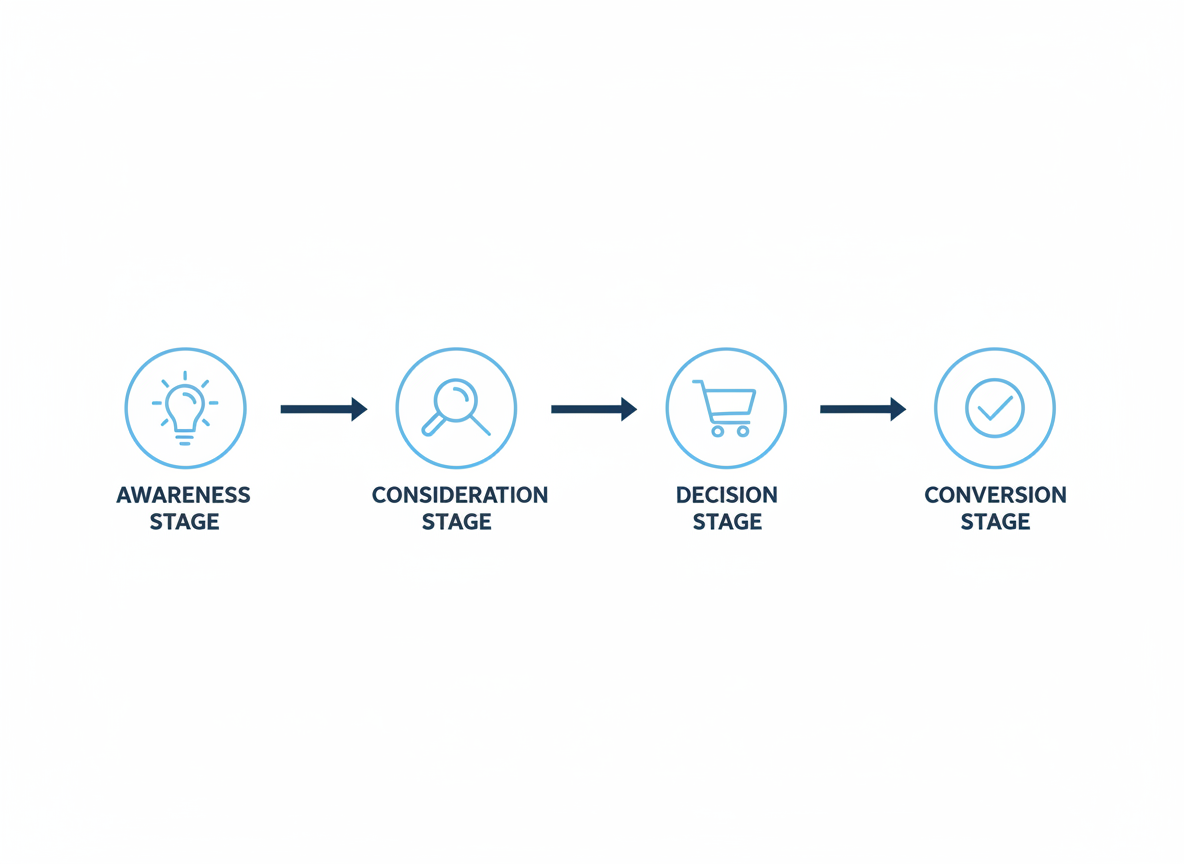
“Top of the funnel tactics are the most overlooked when companies, especially startups and SMB’s, assign budgets. However, they are also the most important.”
Here's what happens when you don't understand attribution:
You kill campaigns that actually work. A display campaign seems to have low ROI because it doesn't get credit for conversions. You pause it. But it was actually doing the heavy lifting—creating awareness and interest that led to conversions later.
You overspend on the wrong channels. You see that your Google Ads have a great ROI, so you dump more budget there. But Google is getting credit for conversions that other channels influenced. You're paying premium prices for last-click credit.
You make bad budget decisions. Without understanding the full customer journey, you can't optimize your spend. You're flying blind.
You waste money on redundant ads. You might be running ads that overlap in audience and message, cannibalizing each other's performance without realizing it.
The cost? Businesses typically waste 30-40% of their advertising budget on inefficient channels they don't realize aren't working.
Your advertising platform can show you the data. But interpreting that data—and knowing what to do with it—is where most businesses fall short.
The Attribution Models
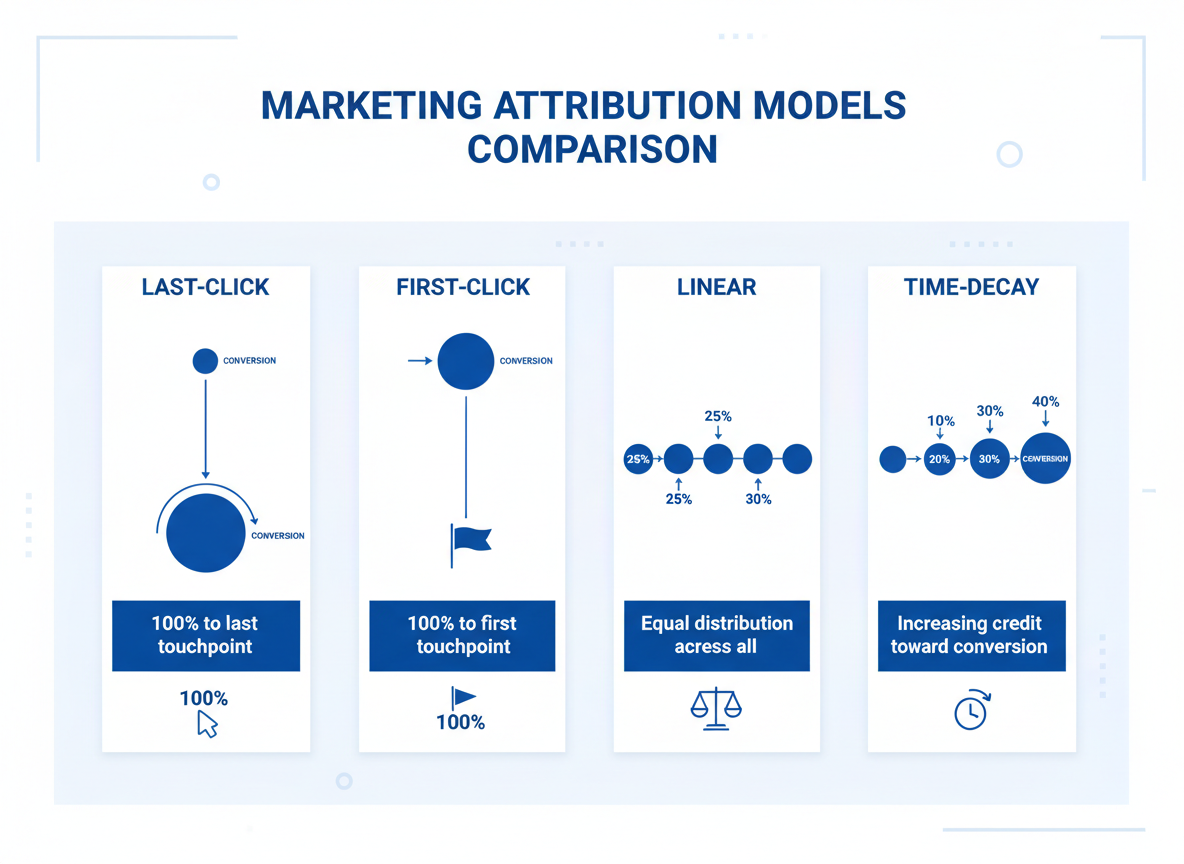
Standard attribution models force complex journeys into arbitrary rules, miss cross‑device/offline and delayed effects, and miscount due to tracking limits. They bias toward last‑click channels over upper‑funnel tactics. Without incrementality testing and unified measurement, marketers may optimize the wrong metrics and harm growth.
There are several ways to attribute conversions:
Last-Click Attribution: The last touchpoint before conversion gets 100% credit. Simple, but incomplete.
First-Click Attribution: The first touchpoint gets 100% credit. Good for understanding awareness, but ignores the journey.
Linear Attribution: Each touchpoint gets equal credit. Fair, but doesn't reflect reality (some touchpoints matter more than others).
Time-Decay Attribution: Touchpoints closer to conversion get more credit. More realistic, but still arbitrary.
Data-Driven Attribution: Machine learning analyzes your actual data to determine which touch points truly influenced conversions. Most accurate, but requires volume and setup.
Most businesses use last-click by default because it's what their tools show them. It's also the most misleading.
A good advertising platform will offer multiple attribution models. But choosing the right one—and knowing how to act on the insights—requires strategy and expertise.
How to Fix the Attribution Problem
1. Set Up Proper Tracking
You need to track the full customer journey, not just the last click. This means:
Implementing conversion pixels across all your channels
Using UTM parameters to track source, medium, and campaign
Setting up Google Analytics 4 (which has better cross-device tracking)
Connecting your CRM to your advertising platforms
Without proper tracking, you're guessing. Your platform can only work with the data you give it.
2. Use Multi-Touch Attribution
Move beyond last-click. Use a model that credits multiple touch points. Most modern advertising platforms offer multi-touch or data-driven attribution options.
The goal is to see the full picture of how customers interact with your brand before converting.
3. Analyze Your Customer Journey
Look at the paths customers take before converting. Do they typically see a display ad first? Then search? Then retarget? Understanding this pattern tells you which channels are doing awareness work vs. conversion work.
Your platform can provide this data. Your strategist should interpret it.
4. Test and Optimize
Once you understand attribution, you can optimize. Maybe your display ads are doing awareness work but not converting. That's fine—they're supposed to. But you need to make sure you're following up with retargeting or search ads to close the deal.
This is where platform capability meets strategic thinking. You need both.
5. Consider Incrementality Testing
The gold standard is incrementality testing—running ads for some audiences and not others to see the true lift. It's more complex, but it gives you definitive answers about which ads actually drive results.
The Bottom Line
Most businesses are making advertising decisions based on incomplete data. They're crediting the wrong channels, overspending on some, underspending on others, and wasting 30-40% of their budget in the process.
Attribution isn't sexy. It's not a flashy tactic. But it's foundational.
A good advertising platform gives you the tools. But knowing how to use those tools—how to interpret the data, optimize your spend, and build a strategy around it—is what separates businesses that waste money from businesses that make money.
Once you understand which ads actually drive conversions, you can optimize your spend, kill what's not working, and double down on what is. That's when your advertising becomes efficient.
Ready to stop guessing and start knowing which ads actually drive your business?
Schedule a free consultation with Devise & Conquer Marketing. We'll audit your current attribution setup, identify blind spots in your data, and build a data-driven strategy to maximize your ROI.