
Geofencing 101: How to Steal Customers from Your Competitors
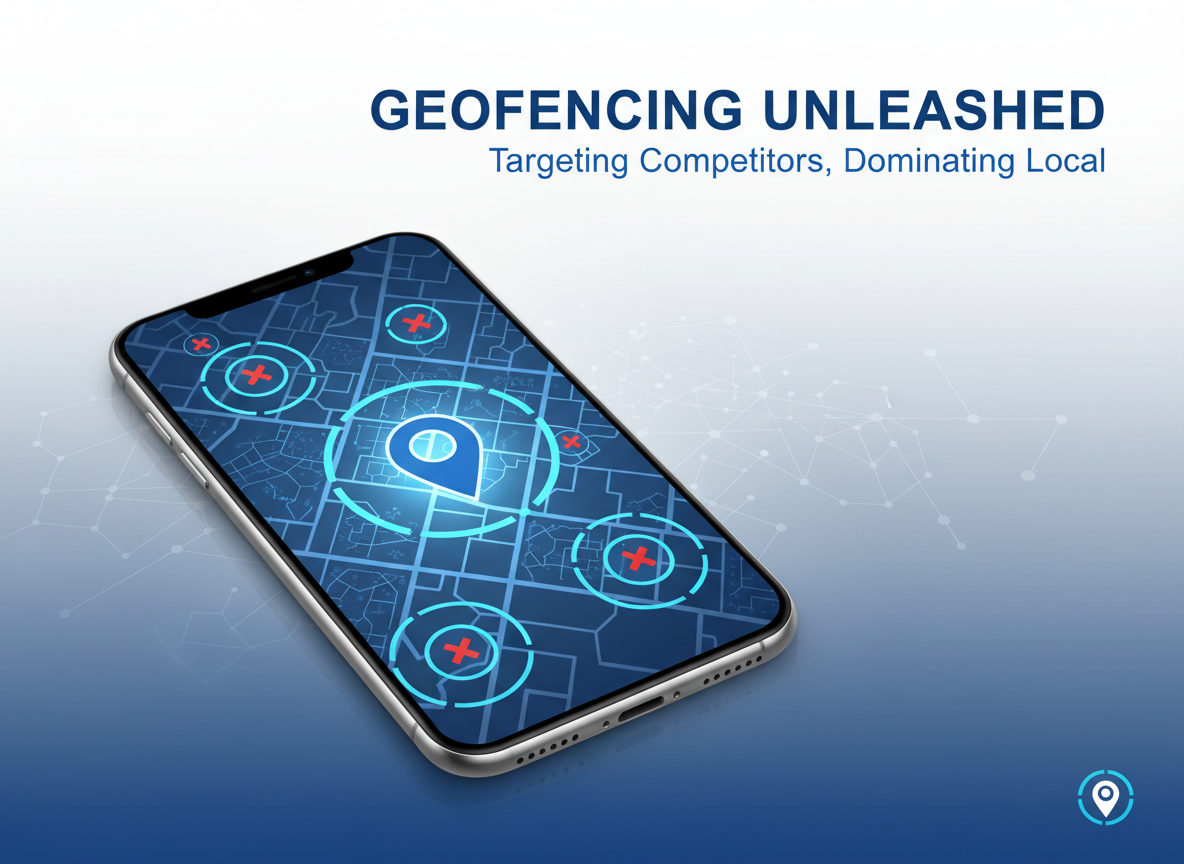
Your competitor's customers are driving past your location right now. And you're not reaching them.
Geofencing changes that. It's a targeted advertising strategy that puts your ads directly in front of customers at your competitor's location—or in neighborhoods where your ideal customers live.
The best part? It works. We've seen local businesses increase foot traffic by 40-60% using geofencing alone.
What Is Geofencing (And Why It Works)
Geofencing is the best way to target advertising to warm leads and has one of the highest click-through rates.
Geofencing is a location-based advertising technology that creates a virtual boundary around a physical location. When someone's phone enters that boundary, they see your ad.
Here's the simple version:
You define a geographic area (your competitor's parking lot, a neighborhood, a shopping district)
You set up targeted ads
When someone's phone enters that area, they see your ad
They click, visit your site, or come to your location
Why it's so effective:
You're not wasting budget on random people. You're targeting warm prospects—people who are already interested in what you sell (because they're at a competitor's location) or people who live in areas where your ideal customers are.
That's precision targeting. That's ROI.
“Any industry that believes following up with prospects should be a standard practice should also be using retargeting on their digital marketing... oh wait, that’s all of them.”
Real Example: How a Local Business Increased Sales 3x
We worked with a Savannah-based golf cart company competing against larger regional dealers with significantly bigger marketing budgets.
The Challenge:
Customers were visiting competitor dealerships and never even knowing this business existed. They had a better product, better service, and better financing options. But nobody knew about it.
The Geofencing Strategy:
We set up geofences around competitor dealership locations in Savannah and surrounding areas (Pooler, Rincon, Hardeeville, Hilton Head). When customers visited those competitor locations, they saw ads highlighting key advantages:
20-30% lower pricing than major national brands
2-week service turnaround (vs 4-6 weeks elsewhere)
0% financing for 36 months
In-house warranty and maintenance

3x Foot Traffic Increase
From geofencing competitor locations.
The Results:
Within 60 days, the company saw a 3x increase in foot traffic from geofenced areas. Customers were coming in specifically asking about the financing and service guarantees they saw in the ads.
The beauty? Those customers were already interested in the product category. They just didn't know this business was an option.
How to Set Up Geofencing for Your Business
1. Identify Your Target Locations
Where are your competitors? Where do your ideal customers spend time?
For a retail business, targets might include:
Competitor locations
Industry-specific gathering places (golf courses for golf carts, marinas for boats, etc.)
Affluent neighborhoods where your ideal customers live
2. Define Your Geofence Radius
Geofences can be as small as 50 feet or as large as several miles. For retail locations, 300-500 feet is typical. For neighborhoods, you might use a larger radius.
Most successful campaigns use 500-foot geofences around competitor locations to catch customers in the parking lot and nearby areas.
3. Create Compelling Ad Creative
Your ad needs to stand out and give a reason to visit. Focus on:
Price comparison ("20-30% less than competitors")
Service speed ("2-week turnaround")
Financing ("0% for 36 months")
Trust signals ("In-house warranty")
4. Set Your Budget and Timeline
Geofencing is cost-effective. You're only paying when someone in your geofence sees your ad. Start with a modest budget ($500-1,000/month) and scale based on results.
5. Track and Optimize
Monitor which geofences perform best. Which competitor locations drive the most traffic? Which neighborhoods convert best? Double down on winners, pause under performers.
Common Geofencing Mistakes (And How to Avoid Them)
Mistake 1: Geofencing Too Broadly
If your geofence is too large, you're reaching people who don't care about your offer. Keep it tight—focus on high-intent locations.
Mistake 2: Weak Ad Creative
A generic ad won't work. Give people a reason to click. Use specific benefits, not vague promises.
Mistake 3: Not Tracking Results
You need to know which geofences are working. Use UTM parameters, unique phone numbers, or promo codes to track where customers come from.
Mistake 4: Ignoring Follow-Up
Geofencing brings people to your site or location. But you need a follow-up system to convert them. Email, retargeting ads, or a sales team ready to engage.
Geofencing vs. Other Location Strategies
Geofencing vs. Google Local Services Ads:
Geofencing: More targeted, works anywhere
Local Services: Better for service businesses, limited to certain industries
Geofencing vs. Facebook Local Ads:
Geofencing: More precise location targeting
Facebook: Better for brand awareness, broader reach
Geofencing vs. Direct Mail:
Geofencing: Instant, measurable, scalable
Direct Mail: Tangible, good for certain demographics
For most brick and mortar businesses, geofencing is the strongest option because it combines precision targeting with real-time delivery and measurable results.
The Bottom Line
Your competitors are spending money on marketing. Geofencing lets you intercept those customers before they make a decision.
You're not being aggressive—you're being smart. You're reaching people who are already interested in what you sell. You're showing them why you're the better choice.
This case study proved it works. A local business competing against national brands increased sales 3x by simply reaching the right people at the right time.
Ready to steal some customers from your competition?
Schedule a free consultation with Devise & Conquer Marketing. We'll identify your best geofencing opportunities, create targeted ads, and help you capture market share from competitors.